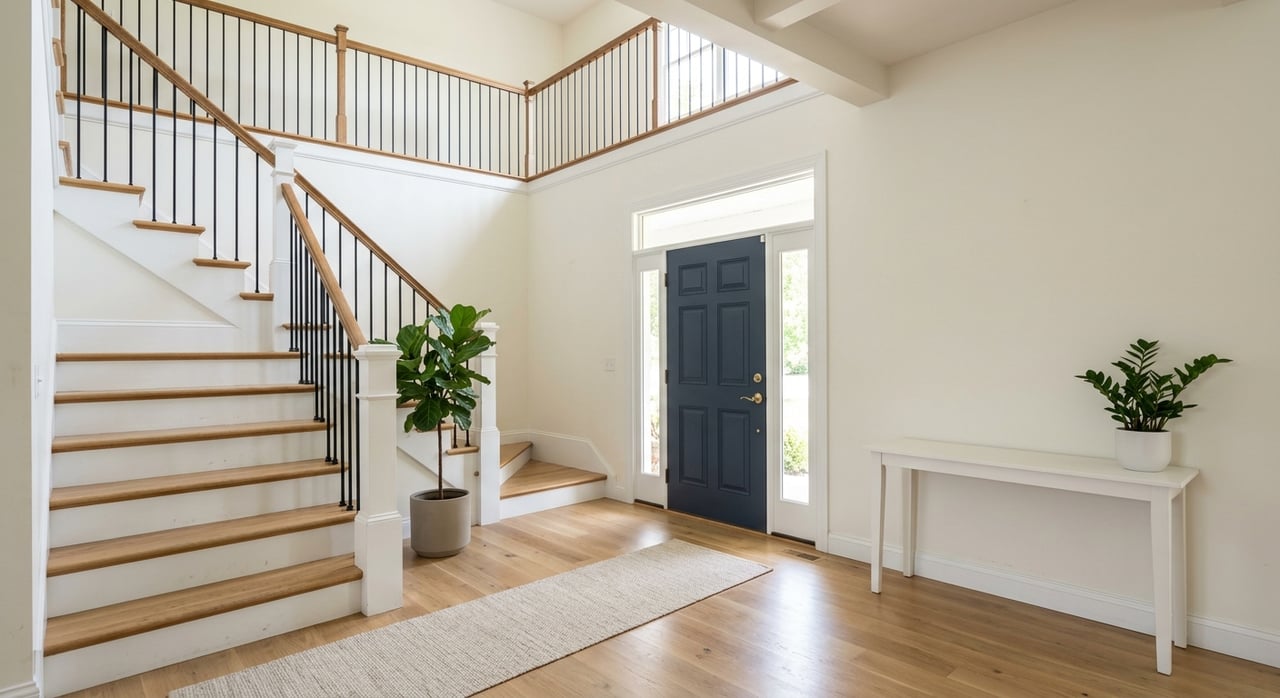
If your current home no longer fits the way you live, you are not alone. Many Bristol buyers reach a point where they need more bedrooms, a bigger yard, a home office, or space to grow, but the jump to a larger home can feel more complicated than expected. The good news is that a smart plan can make the move much clearer. In this guide, you will learn how Bristol’s market affects move-up buyers, how to budget with real numbers, and what local details can shape your next purchase. Let’s dive in.
Bristol move-up buyers face two markets
When you move up, you are really working through two transactions at once. You are selling your current home while also trying to buy a home that likely sits in a higher price range with different competition.
That matters in Bristol right now. Recent market snapshots point to a seller-leaning environment in Bristol proper, with homes often moving in roughly 43 to 58 days depending on the data source, and asking prices often landing closer to the high-$200,000s or low-$300,000s even though many closed sales are still in the low-$200,000s.
For you, the takeaway is simple: budget to the listing market, not just to what you hope your current equity will cover. A well-priced move-up home can still attract quick interest, even if some buyers end up with a little room to negotiate at closing.
Bristol vs. Sullivan County price ranges
Bristol proper is only part of the picture. If you are open to a wider search, Sullivan County can offer a more balanced market overall, with homes in the county selling slightly below asking on average and taking about 49 days on market in recent reporting.
That flexibility can matter if your goal is more space without pushing your budget too far. Nearby median list prices vary quite a bit, from about $259,000 in Bloomingdale and about $264,950 in Walnut Hill to around $305,000 in Kingsport, $354,585 in Bluff City, $374,565 in Blountville, and $498,000 in Piney Flats.
If you want significantly more square footage, a larger lot, or a different finish level, widening your search radius may give you more realistic options. You may need to balance price with commute, lot size, or the amount of updating you are willing to take on.
Start with net proceeds, not equity on paper
One of the biggest mistakes move-up buyers make is treating home equity like cash they already have. On paper, your equity is your home’s value minus what you still owe on your mortgage, but that number is not the same as what will land in your account after closing.
A better approach is to estimate your net proceeds. That means starting with a realistic sale price for your current home, subtracting your mortgage payoff, and then planning for your closing costs and moving expenses.
You also need room for the costs that show up after the purchase. Closing costs on the next home typically run about 2% to 5% of the purchase price, and that is separate from your down payment. It is also wise to set aside money for moving, repairs, furnishings, and an emergency cushion.
Get preapproved before shopping seriously
A preapproval letter helps you understand what a lender may be willing to lend based on your finances. It is not a final loan guarantee, but sellers often expect to see one when you make an offer.
Timing matters here. Preapproval letters commonly expire in 30 to 60 days, so it helps to line this up when you are ready to move, not months too early.
This is also the stage where rate shopping can make a real difference. Mortgage rates change daily, and even a small shift in rate can affect how much home you can comfortably afford each month.
Build your move-up budget in four steps
Move-up buying works best when you break it into clear pieces. Instead of guessing, walk through the numbers in order.
- Estimate your current home’s value and equity
- Get preapproved for the next mortgage
- Calculate your cash needed for down payment and closing costs
- Decide whether selling first or buying first fits your reserves and timeline
This process gives you a more usable number than online estimates alone. It helps you see not only what you can buy, but also what you can buy without stretching your cash too thin.
Should you sell first or buy first?
This is one of the biggest questions move-up buyers ask, and the answer depends on your reserve cash, available equity, and comfort with timing risk. There is no one-size-fits-all choice.
Selling first can give you a clearer picture of your proceeds and make your next budget easier to manage. It can also reduce the risk of carrying two housing payments at once.
Buying first may help if you need flexibility on the move itself, but it usually requires more cash and tighter coordination. If you are considering using a HELOC or home equity loan to bridge the gap, remember that those products use your home as collateral, so the payment needs to fit your budget comfortably.
Keep both closings organized
A move-up purchase is not just about finding the right house. It is about keeping your sale proceeds, mortgage approval, and closing cash lined up so one transaction does not derail the other.
A practical process looks like this:
- Value your current home and estimate equity
- Get preapproved
- Set your full purchase budget
- Choose your sale and purchase order
- Shop for homes and make your offer
- Review your Closing Disclosure carefully
- Complete your final walk-through before signing
Your Closing Disclosure should arrive at least three business days before closing. That gives you time to review your final loan terms and closing costs before you get to the closing table.
Seller credits can help preserve cash
In some transactions, closing costs can be offset in part by seller concessions. For a move-up buyer, that can help preserve cash for moving, repairs, or furnishing the new home.
Still, seller credits are not something to count on in every deal. In a competitive Bristol property, the full offer structure has to make sense for the seller as well.
Bristol details that can change your budget
Move-up buyers often focus on bedrooms and square footage first, but local details can affect the total cost of ownership just as much. In Bristol and Sullivan County, three items deserve extra attention: school district boundaries, property taxes, and permit requirements.
School district boundaries matter
Bristol Tennessee City Schools and Sullivan County Schools are separate districts. Sullivan County Schools reports serving more than 7,700 students across 15 locations, while Bristol Tennessee City Schools serves the city district.
If school assignment matters to your move, verify the district tied to the exact address you are considering. Boundaries and assignment details are address-specific, so it is best not to assume based on a mailing address alone.
Property taxes vary by parcel
There is not one single property tax number for every Bristol home. The City of Bristol notes that property taxes are assessed by Sullivan County, and special assessment district charges may apply depending on the property.
Sullivan County reported a 2025 tax rate of $1.6129 per $100 of assessed value, but your actual bill depends on the specific parcel. Before you commit to a move-up home, verify the tax bill tied to that address.
Permits can affect renovation plans
If your next home needs changes after closing, make sure you understand the permit side before you budget the project. In Sullivan County, permits are required for projects such as decks, garages, additions, roof replacement, pools, and interior remodels.
The county uses the 2018 International Residential Code and 2018 Energy Code. If you are buying a home because it has room to improve, permit requirements should be part of your planning from day one.
Don’t assume your current home will sell instantly
Even in a seller-leaning market, timing is never guaranteed. Recent Bristol data show homes taking roughly 43 to 58 days on market depending on source, so it is better to plan for a real selling window than to expect an immediate contract.
That timeline affects everything from your preapproval timing to your moving plan. It also reinforces why move-up buyers need a clear, coordinated strategy instead of treating the sale and purchase as separate events.
State-level assistance may still be worth a look
Some move-up buyers assume down payment help is only for first-time buyers, but Tennessee programs can be broader in certain cases. THDA’s Great Choice Plus assistance includes either a deferred $6,000 second loan or an amortizing loan of up to 5% of the sales price with a $15,000 cap.
THDA also notes that repeat homebuyers may qualify if they meet one of the program’s criteria. If preserving cash is important for your move, this is one more reason to review your financing options early.
The smart move-up plan for Bristol buyers
If you are moving up in Bristol, the goal is not just to buy more house. It is to make sure the numbers, timing, and local details all work together.
That means using net proceeds instead of rough equity guesses, getting preapproved before you shop seriously, budgeting for closing costs and reserves, and checking the exact address for taxes, district boundaries, and future project requirements. When you build your plan around those details, you can move with much more confidence.
If you are thinking about your next step in Bristol or anywhere in the Tri-Cities, Matthew & Andrea Pendleton can help you line up your sale, your budget, and your move with the kind of local guidance that keeps both sides of the transaction on track.
FAQs
How much house can you afford after selling your current Bristol home?
- Start with your estimated net proceeds, not just your equity on paper. Then factor in the next down payment, closing costs, moving expenses, and a cash reserve.
Should you sell first or buy first in Bristol, TN?
- It depends on your equity, reserve cash, and comfort with timing risk. Selling first can reduce payment pressure, while buying first may require more cash and tighter coordination.
How long might a current home take to sell in Bristol, TN?
- Recent market data show homes taking about 43 to 58 days on market, depending on the source. That is why it helps to build a realistic timeline instead of expecting an immediate sale.
What local details should move-up buyers verify in Bristol, TN?
- Check the exact property tax bill, confirm the school district tied to the address, and review permit requirements if you plan to remodel or add features after closing.
Can repeat buyers in Tennessee qualify for down payment help?
- In some cases, yes. THDA says repeat homebuyers may qualify for Great Choice Plus assistance if they meet one of the program’s eligibility criteria.