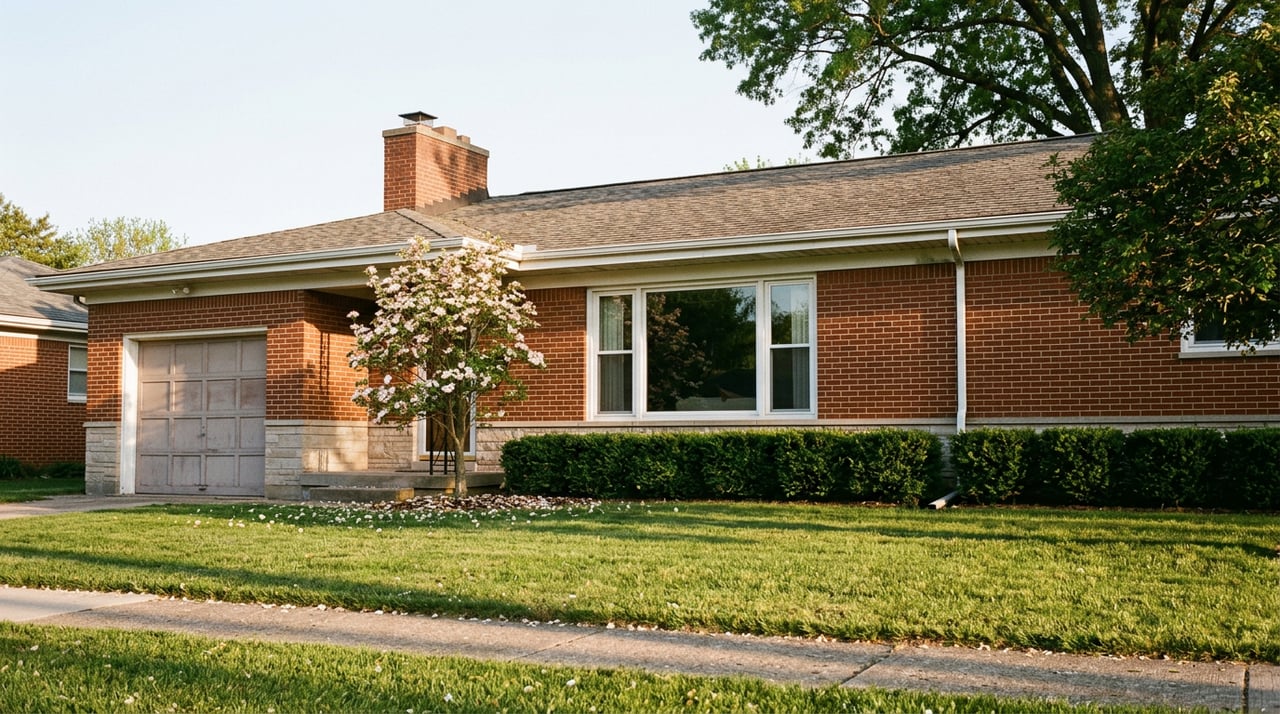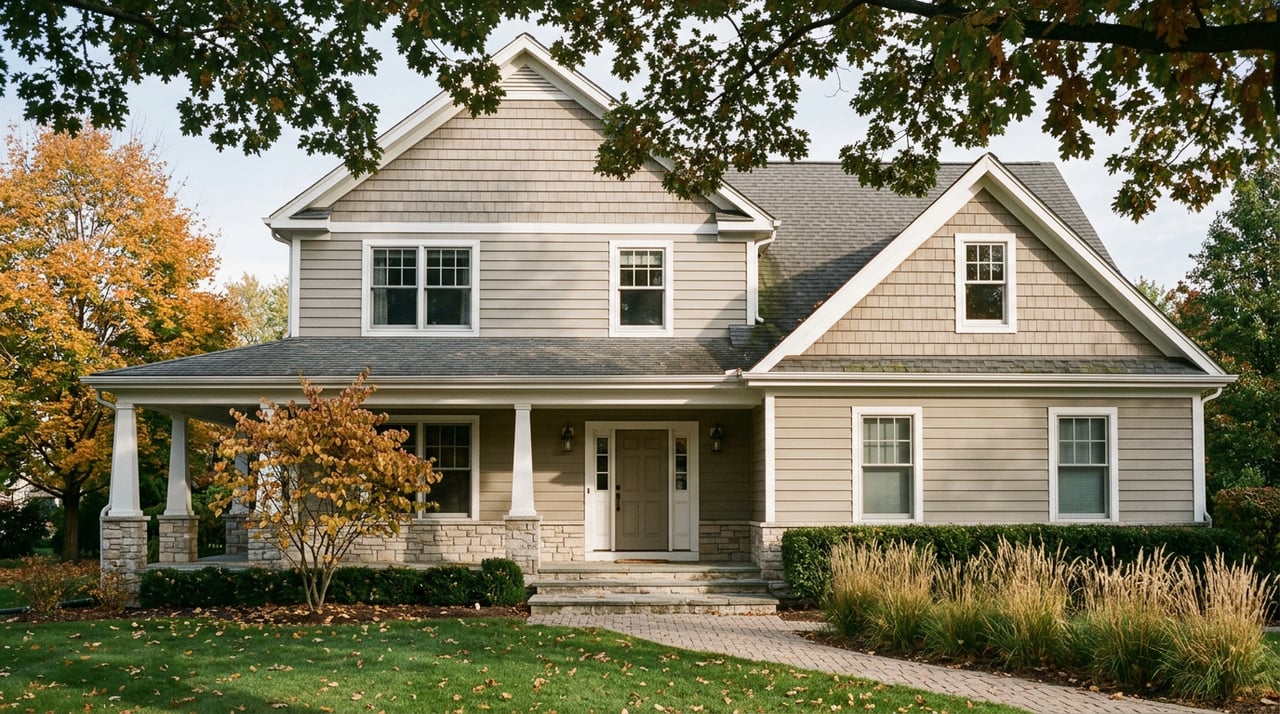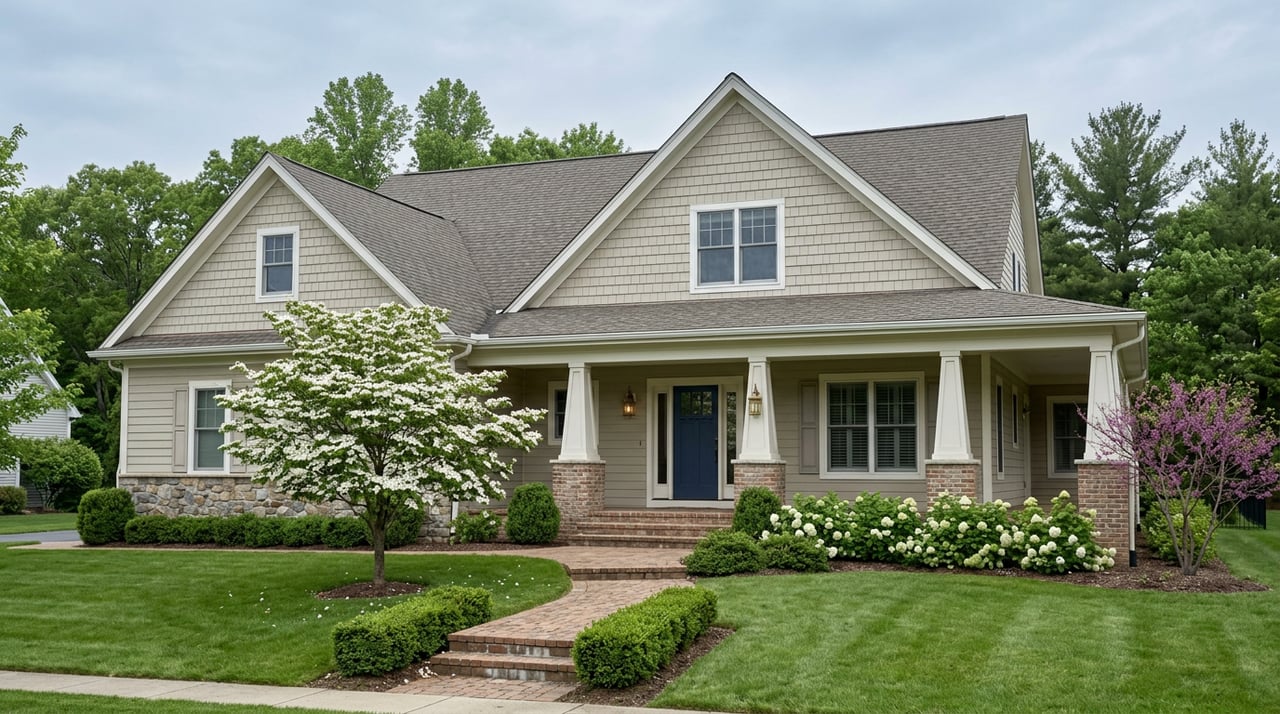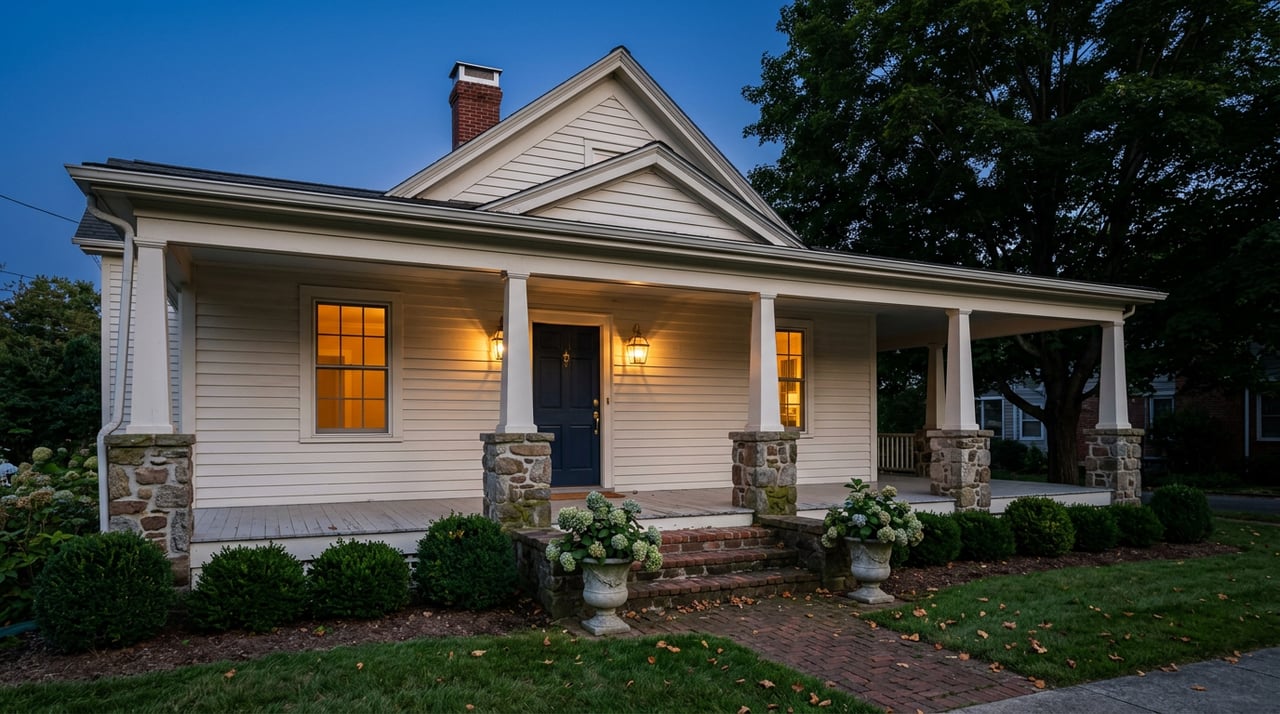
Walk two houses on Valley Street this fall and they will look like the same era of Abingdon. Brick foundation, deep porch, a hundred years of paint layered under the trim. One of those houses was built in 1918. The other went up in 1937. Until this year, the federal paperwork that governs Abingdon's historic district treated them differently enough that only one of them could plausibly claim to be part of the story the town tells about itself. That gap just closed, and a separate gap, the one that determines whether the town's Historic Preservation Review Board has to approve your new porch railing, just opened wider in the opposite direction. Two different lines moved in two different directions in the same twelve months, and conflating them is the single most common mistake a buyer, seller, or renovating owner in this district can make.
The Word That Decides Everything
Every property inside a National Register historic district gets sorted into one of two categories: contributing or noncontributing. It sounds bureaucratic because it is, but it is also the fact that determines whether a home can access one of the more useful financial tools available to Virginia homeowners: the state's 25 percent Historic Rehabilitation Tax Credit.
A building earns "contributing" status by falling within the district's documented period of significance and retaining enough of its original character to support the story the nomination tells. Abingdon's original 1969 listing described that period loosely, as "the 18th and 19th centuries." When the district was extended in 1986 to bring in Valley Street, King Street, Park Street, Oak Hill Street, and White's Mill Road, the paperwork got more specific for that stretch: 1778 to 1936. Homes built after that cutoff, even ones that looked the part, sat outside the documented window and could not claim contributing status no matter how old they felt.
That cutoff just moved. Virginia's Department of Historic Resources approved an updated nomination for the district on September 18, 2025, and the National Park Service followed with National Register approval on April 22, 2026. The update sets a single, more precise period of significance for the entire district: 1779 to 1938. It also adds Industry and Performing Arts to the recognized categories of significance, alongside Architecture, Commerce, and Politics and Government. That second addition is not incidental. It is the paperwork finally catching up to the Barter Theatre's place in the town's history.
For an owner of a home built in 1937, this is not trivia. It is the difference between a building that had no documented path to contributing status and one that now does, assuming it retains its architectural integrity.
The Other Line Moved the Other Way
Contributing status is a National Register concept, decided by the state and federal government. It is not the same thing as the Town of Abingdon's own local Old and Historic District, the zoning overlay that actually triggers Historic Preservation Review Board approval before an owner replaces a window, repaints, or builds an addition. That local boundary has historically been smaller than the state and national register map, and town officials, including Community Development Director Mayana Rice, have spent part of 2025 and 2026 studying how to close that gap. Local reporting on the effort noted that the state register's boundary already extended roughly 15 properties farther east on East Main Street than the town's own zoning line did.
By spring 2026, that gap had started closing. A placemaking review of Abingdon's preservation strategy noted that the town's Historic Preservation District expanded by four blocks, and that the expansion drew no organized opposition from residents. That is a meaningful detail on its own. It means a run of properties that were previously free to swap out siding or repaint without a design review hearing are now inside the boundary where the Historic Preservation Review Board has jurisdiction.
So the two lines moved in opposite directions for opposite reasons. The federal period-of-significance window widened, which is good news for owners of some early-20th-century houses who now have a documented path to tax credit eligibility they didn't have before. The town's local zoning boundary also widened, which means more owners now need HPRB sign-off before they can change how their house looks from the street. A house can land inside the new zoning boundary without being a contributing resource. A house can be a contributing resource without ever needing the zoning question answered, if it sat inside the local boundary already. Treating these as the same fact is how a seller undersells a house's tax advantages, or how a buyer gets surprised by a design review letter six months after closing.
The Tax Credit Most Owners Never Use
Here is where the contributing designation earns its keep. Virginia's Historic Rehabilitation Tax Credit, administered by the Department of Historic Resources, returns 25 percent of eligible rehabilitation expenses to the owner of a certified historic structure. Unlike the federal version of this credit, which pays 20 percent but only for income-producing property, Virginia's credit is open to owner-occupied homes. That distinction gets lost constantly. Most people hear "historic tax credit" and assume it means landlords and commercial buildings. In Virginia, it explicitly does not.
To qualify, a home has to be a certified historic structure, meaning it is either individually listed on the National Register or, more commonly for a house in a district like Abingdon's, certified as contributing. The rehabilitation has to be substantial: for an owner-occupied home, eligible expenses need to reach at least 25 percent of the property's assessed value. The application runs through three stages with the Department of Historic Resources: certifying the building's historic status, certifying the proposed scope of work against the Secretary of the Interior's Standards for Rehabilitation, and certifying the completed work with before-and-after documentation. Unused credit carries forward for up to ten years, so an owner who does a kitchen and bath rehab one year and a roof the next can still capture the full benefit.
For anyone eyeing a contributing property as a rental or short-term conversion, the math gets better. Investors can stack the state's 25 percent credit with the federal government's 20 percent credit on income-producing property, for a combined 45 percent of eligible rehabilitation costs recovered through tax credits. That stacking option does not exist for an owner-occupant, since the federal credit excludes owner-occupied homes entirely. Statewide, Virginia's program has issued $1.7 billion in credits since it launched in 1997 and helped generate $6.8 billion in private rehabilitation investment, according to the Department of Historic Resources, which gives some sense of how established the mechanism is even though most homeowners never hear about the owner-occupied piece of it.
What This Actually Changes at the Negotiating Table
A few practical scenarios show why this matters more than a footnote:
- A seller with a contributing home built in the 1920s or 1930s who has never applied for the state credit is sitting on an unmarketed asset. A buyer planning a kitchen or systems overhaul can factor a 25 percent rehabilitation credit into their renovation budget, and that is worth surfacing in the listing conversation, not discovering after closing.
- A buyer looking at a house that just landed inside the expanded local zoning boundary needs to ask, before writing an offer, whether that same house is contributing or noncontributing under the National Register nomination. Being inside the town's Old and Historic District means HPRB will review exterior changes. It does not automatically mean the tax credit applies.
- An investor considering a rental conversion on a contributing property should run the numbers on stacking both credits before assuming a straight 25 percent reduction in renovation cost. The higher combined rate only applies to income-producing use.
None of this requires an owner to guess. The Town's Community Development office can confirm whether a specific address sits inside the current Old and Historic District boundary, and the Department of Historic Resources can confirm a property's contributing status under the updated nomination. For owners doing only minor exterior work, routine maintenance items can sometimes skip full HPRB review through an administrative waiver from the Director of Community Development, provided the application includes samples of the materials and colors involved.
A Few Questions We Hear Often
Does being in the historic district raise my property taxes? Being inside the district does not by itself change your assessment. What can change your tax picture is claiming the state rehabilitation credit, which is a credit against income tax, not property tax, and is worth discussing with a tax professional before you plan a renovation budget around it.
Do I need permission to repaint my house if I'm inside the local district? If your property sits within the Town's Old and Historic District boundary, exterior changes, including paint colors in some cases, can fall under Historic Preservation Review Board review. Routine maintenance may qualify for an administrative waiver rather than a full hearing. Check with the town before starting work.
My street was just added to the local historic district. Does that mean my house is now eligible for the tax credit? Not necessarily. Zoning boundary and National Register contributing status are determined separately. Confirm contributing status directly with the Department of Historic Resources rather than assuming the two lines match.
If you are weighing a purchase inside Abingdon's historic core, or you own a home there and are not sure which side of either line it falls on, that is exactly the kind of detail worth sorting out before you list or make an offer, not after. The Pendleton Team works these streets regularly and can help you get a clear read on where your property stands. Get your free home valuation and we will walk through what the district's current boundaries actually mean for your house.